

Develop the thinking and communication of real leaders. Build self-leadership, influence skills, and mature decision-making.
We believe that true leadership isn't about titles or authority—it's about developing the thinking, communication, and character that inspire others to follow.

A comprehensive curriculum that helps students develop the deep thinking, authentic communication, and ethical judgment that mark true leaders.
Our High School Leadership Program is built on a foundation of self-leadership, influence, and mature decision-making. We don't believe in generic leadership tips or superficial techniques. Instead, we've designed a comprehensive curriculum that helps students develop the deep thinking, authentic communication, and ethical judgment that mark true leaders.
Every student enters our program with unique strengths, challenges, and leadership contexts. Some lead student organizations but struggle with influence. Others have natural charisma but lack strategic thinking. Some excel in structured roles but struggle with initiative. Our program recognizes these differences and provides pathways for all.
True leadership begins with leading yourself—self-awareness, accountability, and independent thinking form the foundation.
Learn to inspire, persuade, and build consensus through authentic communication and active listening.
Develop critical thinking, ethical judgment, and the ability to make confident decisions under uncertainty.
Build self-awareness, confidence under pressure, accountability, and independent judgment.
Learn to inspire, persuade, and build consensus through storytelling, active listening, and presence.
Develop the ability to identify problems, create solutions, and lead projects from idea to completion.
Develop critical thinking, ethical judgment, resilience, and the ability to lead through uncertainty.
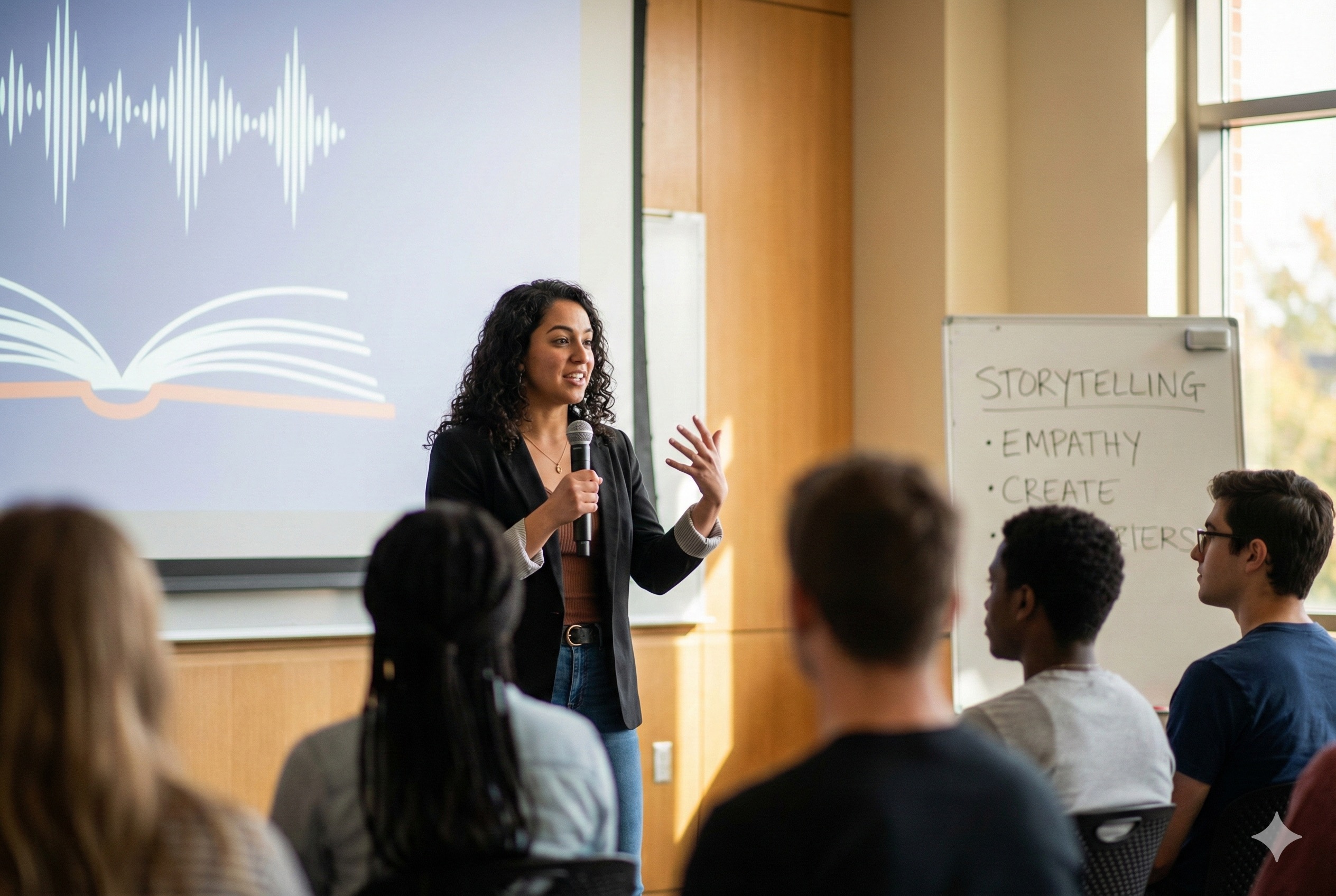
Before leading others, students must learn to lead themselves. Our program starts with self-awareness, confidence under pressure, accountability, and independent thinking. These foundational skills enable everything else—you can't inspire others if you don't know yourself, can't handle pressure, or can't think independently.
Leadership is fundamentally about influence, and influence comes through communication. We teach students to inspire through storytelling, persuade through presence, build consensus through active listening, and guide through facilitation. These skills work whether you have formal authority or not.
Great leaders don't wait for permission—they see problems, create solutions, and take action. Our program teaches students to identify opportunities, plan initiatives, solve problems systematically, and execute projects from idea to completion. This develops the practical leadership skills that create real impact.
True leadership requires mature thinking, ethical judgment, resilience, and the ability to navigate complexity. We help students develop critical thinking skills, make decisions under uncertainty, handle setbacks with resilience, and lead with integrity. These are the qualities that distinguish leaders from managers.
How each level builds on the previous, creating a comprehensive path from self-leadership to mature leadership

A progressive journey that builds essential skills at each level
Our program is designed as a progressive journey where each level builds essential skills that enable success at the next level. Students don't just learn leadership techniques—they develop a comprehensive understanding of how to lead authentically and effectively in any context.
Level 1 (Self-Leadership) establishes the fundamental building blocks: self-awareness, confidence under pressure, accountability, trust-building, and independent thinking. Without these, students can't effectively lead others.
Level 2 (Communicating to Influence) builds on self-leadership by teaching students to inspire, persuade, listen actively, and engage in constructive debate. Students learn to influence without authority.
Level 3 (Leadership in Action) elevates students to take initiative, solve problems, facilitate groups, and think critically. This level focuses on practical leadership skills and real-world application.
Level 4 (Growth & Maturity) represents the pinnacle—students develop decision-making confidence, resilience, professional communication, analytical thinking, and ethical leadership. This level is for students ready to become mature, thoughtful leaders.
While the program is designed progressively, students can enter at any level that matches their current leadership experience. Our coaches assess each student's needs and ensure they're placed appropriately. Students can also go back to earlier levels to strengthen specific foundations if needed.
Building self-awareness, confidence, accountability, trust, and independent thinking—the foundation of all leadership
Building self-awareness, confidence, accountability, trust, and independent thinking—the foundation of all leadership
Level 1 is where authentic leadership begins. Many students enter this level with leadership roles but lack the self-awareness, confidence, or accountability needed to lead effectively. Others have natural charisma but struggle with pressure or independent thinking. Level 1 addresses these fundamental challenges by helping students develop self-leadership—the foundation that enables everything else.
The five courses in Level 1 work together to create a comprehensive foundation. "Lead from Within" helps students discover their leadership style. "Confidence Under Pressure" develops resilience and composure. "The Responsibility Habit" builds accountability. "The Art of Team Trust" teaches trust-building. "Thinking for Yourself" develops independent judgment.
Students identify their natural strengths and values as a leader, developing self-awareness that guides authentic leadership.

Students learn to manage stress and think clearly when the spotlight is on, developing composure that builds trust.

Students build accountability and time management that makes them reliable leaders others can count on.

Students practice empathy and conflict prevention that builds followership and team cohesion.

Students develop courage to think critically even when others disagree, building independent judgment essential for leadership.
Yes, even if you're already in a leadership role. Level 1 focuses on self-leadership—the internal skills that make external leadership effective. Many students in leadership roles discover gaps in self-awareness, confidence under pressure, or accountability that limit their effectiveness. Level 1 strengthens these foundations, making your existing leadership more authentic and effective.
While all five courses work together to create a comprehensive foundation, you can prioritize based on your needs. Courses 1 and 3 are essential—Course 1 for self-awareness, Course 3 for accountability. Courses 2, 4, and 5 address specific challenges (pressure, trust, independent thinking) and can be prioritized based on your current struggles. Our coaches can help you determine the best path.
That's exactly why Level 1 is structured flexibly. If pressure is your main challenge, you can focus intensively on Course 2 ("Confidence Under Pressure") while still taking the other courses to build a complete foundation. Many students find that even areas they feel confident in benefit from structured development—self-awareness (Course 1) and accountability (Course 3) are valuable for everyone, regardless of current confidence levels.
Level 1 includes 5 courses. If you take each course as a Complete version (3 sessions each), that's 15 sessions total (30 hours). Most students complete Level 1 over 3-4 months, scheduling sessions weekly or bi-weekly. You can also take courses as Mini versions (1 session each) for faster progress, though Complete versions provide deeper skill development. The pace is flexible and tailored to your schedule.
While Level 2 builds on Level 1 skills, some students with strong self-leadership foundations can start at Level 2. However, we strongly recommend at least taking Level 1 Course 1 ("Lead from Within") to ensure you have solid self-awareness. Our coaches assess each student's readiness and may recommend specific Level 1 courses even if you start at Level 2. The self-leadership skills from Level 1 make Level 2's influence skills much more effective.
Learning to inspire, persuade, listen actively, and engage constructively—influencing without authority
Learning to inspire, persuade, listen actively, and engage constructively—influencing without authority
Level 2 is where students learn to influence others. Having developed self-leadership in Level 1, students now learn to inspire, persuade, listen actively, and engage in constructive debate. This level focuses on communication skills that create influence whether you have formal authority or not.
The four courses build systematically: "Speak to Inspire" teaches storytelling and inspiration. "Persuasive Presence" develops influence skills. "Active Listening" builds empathy and understanding. "Argue to Understand" teaches constructive debate.
Students learn to use storytelling and tone to make others care about what they're saying, inspiring action through communication.

Students develop gentle persuasion skills that work without authority or conflict, building influence through presence.

Students train empathy and attention, learning how understanding others makes them more influential.

Students learn to challenge ideas constructively, practice logical reasoning, and engage in productive disagreement.
Yes, if you're confident in self-leadership fundamentals, you can start at Level 2. However, we recommend at least reviewing Level 1 Course 1 ("Lead from Within") to ensure you have strong self-awareness. Our coaches can assess your skills and recommend the best starting point. Many students discover they benefit from Level 1's pressure management or accountability work even if they're already confident.
While Course 4 focuses on debate, the skills it teaches—constructive disagreement, logical reasoning, challenging ideas respectfully—apply to many leadership contexts beyond formal debate. However, if your goals are more focused (e.g., inspiring teams, building consensus), you might prioritize Courses 1-3. Our coaches can help you customize your path.
We recommend starting with Course 1 ("Speak to Inspire") as it establishes foundational communication skills that enhance the other courses. Course 2 ("Persuasive Presence") builds naturally on Course 1. Course 3 ("Active Listening") complements both and can be taken in any order. Course 4 ("Argue to Understand") is most effective after you've developed inspiration and listening skills. However, your coach can help you customize the order based on your specific goals and challenges.
Absolutely. Level 2 is designed for students of all communication styles. Course 3 ("Active Listening") is particularly powerful for quieter students—listening skills are often more influential than speaking. Course 1 ("Speak to Inspire") helps you find your authentic voice rather than forcing you to be loud. Course 2 ("Persuasive Presence") develops influence through presence, not volume. Many quiet students discover that Level 2 helps them influence effectively while staying true to their natural style.
Your coach will help you identify real-world opportunities to practice—group projects, club meetings, student council, conversations with teachers, or family discussions. Each course includes specific practice exercises tailored to your context. For example, Course 1 might involve practicing storytelling in a club presentation, while Course 3 might involve active listening exercises in group projects. The skills are designed to be immediately applicable, and your coach will help you integrate them into your daily life.
Leading projects, solving problems, facilitating groups, and thinking critically—practical leadership skills
Leading projects, solving problems, facilitating groups, and thinking critically—practical leadership skills
Level 3 is for students ready to take action. Having developed self-leadership and influence skills, students now learn to identify problems, create solutions, lead projects, and facilitate groups. This level focuses on practical leadership skills that create real impact.
The four courses address different aspects of practical leadership: "Initiative in Action" teaches project leadership. "Problem-Solving Like a Leader" develops solution-focused thinking. "Leadership in Conversations" covers facilitation. "The Critical Thinker's Toolkit" enhances decision-making.
Students learn to plan and carry out a small, personal initiative from idea to completion, developing project leadership skills.

Students learn to analyze challenges and take ownership of improvements, developing solution-focused leadership.

Students practice conversational leadership—asking questions and creating consensus without dominating.

Students learn to spot flawed reasoning, recognize bias, and make rational decisions as leaders.
The initiative can be anything meaningful to you—a school project, a community service effort, a club improvement, or a personal goal. The focus isn't on the scale but on learning to plan, execute, and lead a project from start to finish. Your coach will help you identify an appropriate initiative and guide you through the process, teaching project leadership skills along the way.
Level 3 builds on the influence and communication skills from Level 2, so completing Level 2 is recommended. However, if you have strong communication skills and are ready to take initiative, you might be able to start Level 3 while still working on Level 2. Our coaches assess your readiness and can recommend the best approach. The practical leadership skills in Level 3 are most effective when combined with Level 2's influence skills.
Absolutely. Level 3 teaches practical leadership skills that work in any context—group projects, clubs, community service, or personal initiatives. You don't need a formal title to take initiative, solve problems, facilitate groups, or think critically. Many students use Level 3 skills to create opportunities and demonstrate leadership potential, which often leads to formal leadership roles. The skills are valuable whether you're leading a team or leading yourself.
Course 2 focuses on practical problem-solving—identifying challenges and creating solutions. Course 4 focuses on critical thinking—analyzing reasoning, recognizing bias, and making rational decisions. While related, they address different aspects: Course 2 is about action and solutions, while Course 4 is about thinking clearly and making sound judgments. Both are essential for effective leadership, and they complement each other—you need clear thinking to solve problems effectively.
Facilitation is a skill that develops with practice, and Course 3 is designed to build it gradually. Your coach will start with simple exercises and progress to more complex scenarios. Many students find that the active listening skills from Level 2 Course 3 are foundational for facilitation. If you're struggling, your coach can provide additional practice opportunities and break down the skills into smaller steps. Facilitation is valuable even if you're not naturally outgoing—quiet leaders often excel at guiding conversations through thoughtful questions.
Developing decision-making confidence, resilience, professional communication, analytical thinking, and ethical leadership
Developing decision-making confidence, resilience, professional communication, analytical thinking, and ethical leadership
Level 4 represents the pinnacle—where students become mature, thoughtful leaders. Having mastered self-leadership, influence, and practical skills, students now develop decision-making confidence, resilience, professional communication, analytical thinking, and ethical judgment.
The five courses address different aspects of mature leadership: "Decision Making with Confidence" develops judgment under uncertainty. "Resilience Training" builds emotional tools for setbacks. "Leading Up" teaches professional communication. "The Analytical Mind" enhances reasoning. "Ethics in Everyday Decisions" develops ethical leadership.
Students understand how leaders weigh information and handle uncertainty, developing confident decision-making skills.

Students develop emotional tools to recover from failure and learn from mistakes, building resilience essential for leadership.

Students learn to respectfully advocate for themselves and build professional relationships with adults.
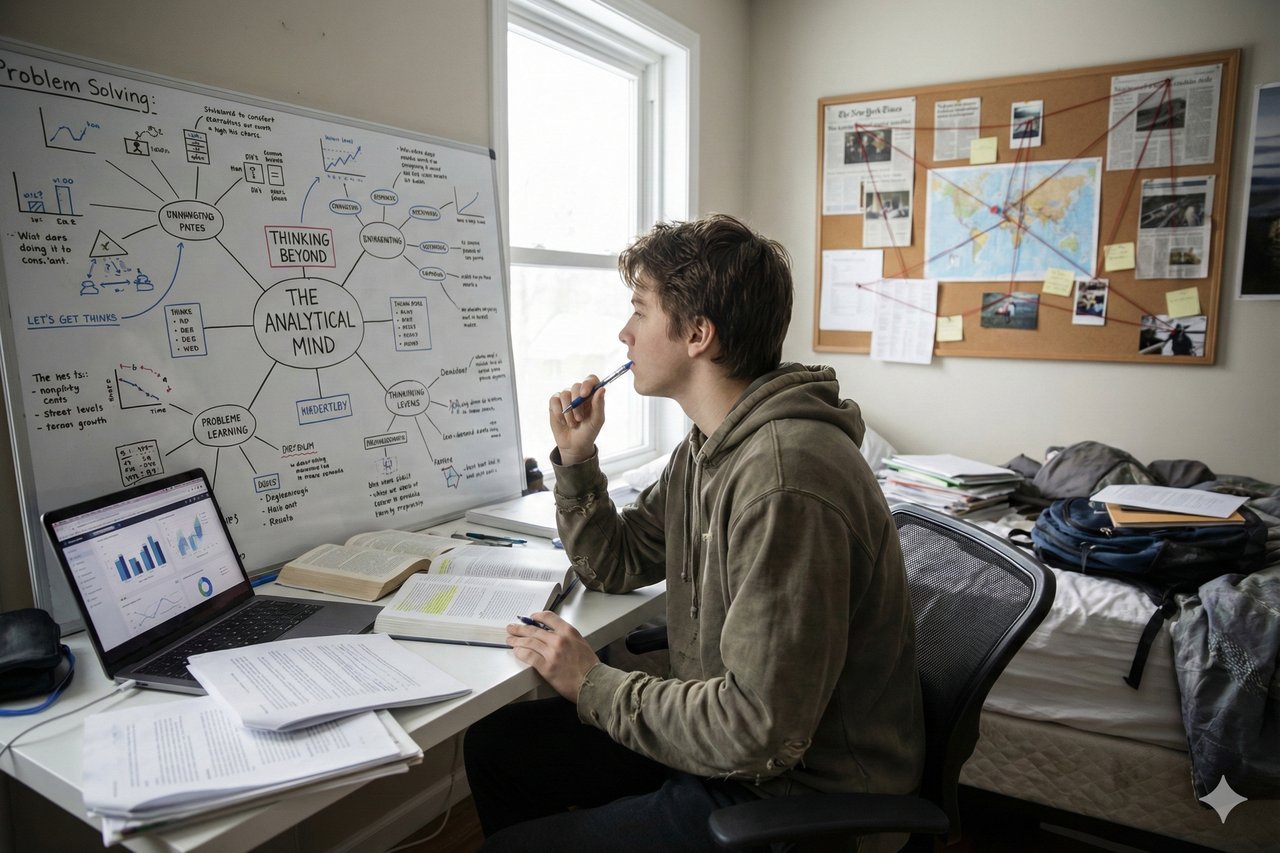
Students sharpen reasoning through real-world scenarios, developing analytical skills for complex leadership challenges.

Students explore how good leaders make ethical choices by understanding consequences, developing integrity essential for leadership.
Level 4 assumes mastery of the skills taught in previous levels. While you don't necessarily need to complete every course in Levels 1-3, you should have strong self-leadership, influence skills, and practical leadership experience before attempting Level 4. Our coaches can assess your readiness and recommend any prerequisite work.
Not at all. Level 4 skills—decision-making, resilience, professional communication, analytical thinking, and ethics—are valuable in any field or career path. Whether you're planning to study engineering, medicine, arts, or business, these mature leadership skills will serve you well. They're also valuable for college success, personal growth, and navigating complex life decisions. Level 4 is about developing mature thinking and character, not just leadership techniques.
Ethical leadership is what distinguishes true leaders from those who simply have authority. Course 5 helps you develop frameworks for making ethical decisions, understanding consequences, and leading with integrity. These skills are essential for building trust, making difficult decisions, and maintaining your reputation. Many leadership failures stem from poor ethical judgment, not lack of skills. Course 5 ensures you can lead effectively while maintaining your values and integrity.
Course 3 teaches professional communication skills that are essential for college success—advocating for yourself with professors, building relationships with advisors, communicating with administrators, and networking with professionals. These skills help you navigate academic challenges, secure opportunities, and build professional relationships. Many students find Course 3 particularly valuable for college applications, interviews, and building relationships with mentors.
While all five courses work together to create comprehensive mature leadership skills, you can prioritize based on your needs. Courses 1 (Decision Making) and 2 (Resilience) are foundational and recommended for everyone. Course 3 (Leading Up) is particularly valuable for college-bound students. Courses 4 (Analytical Thinking) and 5 (Ethics) address specific aspects of mature leadership. Your coach can help you determine which courses are most valuable for your goals and timeline.
Students who complete the High School Leadership Program develop comprehensive leadership mastery—the thinking, communication, and character that mark true leaders.
Students develop the ability to lead themselves authentically, influence others effectively, take initiative confidently, and make mature decisions with integrity. These skills create immediate impact and lifelong advantage.
Comprehensive curriculum across 4 progressive levels
Personalized coaching tailored to your unique strengths and goals
Skills that serve you through college, career, and beyond
Confidence in leadership roles and responsibilities
Ability to influence peers and build consensus
Skills to take initiative and lead projects
Stronger college applications and interviews
Respect from teachers, coaches, and peers
Preparation for college leadership opportunities
College leadership success
Career advantage in any field
Ability to lead teams and organizations
Confidence making important decisions
Resilience to handle challenges
Lifelong leadership skills
Our students report dramatic improvements in confidence, influence, and leadership effectiveness. Many secure leadership positions, lead successful initiatives, and excel in college interviews.
The thinking, communication, and character skills developed in this program serve students throughout their academic and professional careers, creating lasting impact that extends far beyond high school.
Real students, real challenges, real transformations. See yourself or your child in these stories.
Maya, 16, Junior
Maya was elected student council president but felt overwhelmed and unsure. She had good ideas but struggled to get others to follow through. When she tried to lead, people didn't take her seriously. She felt like she was failing at a role she'd wanted but wasn't prepared for. The pressure was constant, and she questioned whether she was cut out for leadership.
Maya started with Level 1, focusing on confidence under pressure and accountability. This gave her the foundation she needed. Level 2's influence skills were transformative—she learned to inspire rather than just direct. Level 3 helped her take initiative on projects that created real impact. The combination of self-leadership, influence, and practical skills transformed her leadership.
Maya successfully led several school initiatives, built strong relationships with peers and teachers, and felt confident in her leadership role. She's now planning to continue leadership in college and says the program didn't just teach her to lead—it helped her become the leader she wanted to be.
Ryan, 17, Senior
Ryan had natural charisma and people listened to him, but he struggled with follow-through and accountability. He could inspire but couldn't execute. When he tried to lead projects, things fell apart because he lacked planning and accountability skills. He knew he had leadership potential but couldn't translate it into real results.
Ryan started at Level 1, Course 3 ("The Responsibility Habit"), which addressed his accountability gap. He then moved to Level 2 to enhance his natural influence skills, and Level 3 to develop practical project leadership. The combination of accountability, enhanced influence, and practical skills was transformative.
Ryan successfully led a major school initiative from idea to completion, building on his natural charisma with accountability and project management skills. He's now recognized as a leader who can both inspire and deliver results. He plans to study business and continue developing his leadership skills.
Lily, 16, Sophomore
Lily was thoughtful and had great ideas but struggled to speak up or take initiative. She saw problems but didn't know how to address them. When she did speak, people didn't listen because she lacked confidence and presence. She knew she had leadership potential but couldn't unlock it.
Lily completed Level 1 to build confidence and self-awareness, then focused on Level 2's influence skills, especially Course 1 ("Speak to Inspire") and Course 3 ("Active Listening"). Level 3's initiative course helped her take action on ideas. The combination of confidence, influence, and initiative was transformative.
Lily now speaks up confidently, leads initiatives, and influences others through her thoughtful approach. She's started a school club and successfully led several projects. She says the program helped her find her voice and gave her the confidence to use it.
Chris, 17, Senior
Chris was ambitious and held multiple leadership roles but struggled with mature decision-making and ethical judgment. When faced with complex situations, Chris made impulsive decisions or avoided making decisions at all. The pressure of leadership roles was overwhelming, and Chris questioned whether leadership was worth the stress.
Chris completed Levels 1-2 to strengthen foundations, then focused intensively on Level 4. Course 1 on decision-making helped Chris think through complex situations. Course 2 on resilience helped manage pressure. Course 5 on ethics provided frameworks for ethical leadership. The combination was transformative.
Chris now makes confident, thoughtful decisions, handles pressure with resilience, and leads with integrity. The leadership roles that once felt overwhelming now feel manageable and meaningful. Chris plans to continue leadership in college and feels prepared for the challenges ahead.
The full program includes 18 courses across 4 levels. If you take each course as a Complete version (3 sessions each), that's 54 sessions total (108 hours). Most students complete the full program over 12-18 months, scheduling sessions weekly or bi-weekly. However, you can customize your pace and focus on the levels that match your goals.
Many students don't complete all four levels—they focus on the levels that match their current needs. For example, a student in a leadership role might focus on Levels 1-2, while a student ready for mature leadership might focus on Levels 3-4.
Absolutely. Leadership isn't about titles—it's about influence, initiative, and impact. Our program teaches skills that work whether you have formal authority or not. Many students use these skills to influence group projects, start initiatives, advocate for causes, and prepare for future leadership roles. The skills are valuable for any student who wants to make an impact.
Our program offers several key advantages:
Many students take our program alongside school leadership programs—they complement each other well. Our program provides the personalized foundation and advanced skills that group activities can't always offer.
Many students continue with advanced coaching, return to specific courses for refreshers, or move on to our College-level programs. Leadership skills benefit from ongoing practice and refinement. You can also explore our other High School programs (Public Speaking, College Applications, Social Confidence) to develop complementary skills.
Browse our courses, find your starting point, and begin your journey from potential to proven leadership.